Stains are one of the most common reasons clothes end up looking old before their time. How to Remove Stains from Clothes: Easy Methods for Every Common Stain, Whether it’s a coffee spill on your favorite shirt, grease on your jeans, ink on your workwear, or sweat stains under the arms, knowing how to remove stains from clothes can help you keep your garments looking fresh and clean.
The key to successful stain removal is acting quickly and using the right cleaning method for the type of stain and fabric. Some stains respond well to ordinary laundry detergent, while others may require specialized stain removers or professional laundry and dry-cleaning services.
In this complete guide, we’ll explain how to remove stains from clothes at home, the best ways to deal with common stains, mistakes to avoid, and when you should consider professional cleaning.
Why Should You Remove Stains Quickly : best way to Remove Stains from Clothes
The sooner you treat a stain, the better your chances of removing it completely.
Fresh stains are often easier to clean because they have not had enough time to penetrate deeply into the fabric fibers. Once a stain dries—or is exposed to heat in a dryer—it can become much more difficult to remove.
For this reason, try to treat stains as soon as you notice them. How to Remove Stains from Clothes: Easy Methods for Every Common Stain
A simple rule to remember is:
Blot → Treat → Wash → Check → Dry
Never assume a stain has disappeared just because the clothing looks cleaner after washing. Check the garment before putting it in the dryer.
—
best way to Remove Stains from Clothes
Different stains require different treatments, but these general steps work for many everyday stains.
1. Check the Care Label
Before applying any cleaning solution, read the clothing care label.
The label tells you whether the garment can be machine washed, hand washed, tumble dried, or dry cleaned.
Pay particular attention when cleaning delicate fabrics such as:
– Silk
– Wool
– Suede
– Leather
– Rayon
– Embroidered clothing
– Formalwear
If the garment says “Dry Clean Only,” professional cleaning is usually the safest option.
2. Remove Excess Material
If the stain contains solid material, such as food, chocolate, or mud, carefully remove the excess using a spoon or dull edge.
Avoid scraping aggressively because you could damage the fabric.
3. Blot the Stain
For liquid stains, use a clean cloth or paper towel to absorb as much liquid as possible.
Don’t rub the stain aggressively.
Instead, gently blot from the outside toward the center. This can help prevent the stain from spreading.
4. Apply the Right Treatment
Choose a stain treatment based on the type of stain.
Apply a small amount of the cleaning solution to the affected area and gently work it into the fabric.
Before using a new product, test it on a hidden section of the garment to make sure it doesn’t cause discoloration.
5. Wash the Garment
Wash the clothing according to its care label.
After washing, inspect the stained area carefully.
If the stain remains, repeat the appropriate treatment instead of immediately putting the garment in the dryer.
—
How to Remove Oil and Grease Stains from Clothes
Oil and grease stains can be particularly stubborn because they don’t mix easily with water.How to Remove Stains from Clothes: Easy Methods for Every Common Stain
They can come from cooking oil, butter, sauces, cosmetics, or automotive grease.
Steps to remove grease stains:
1. Blot excess oil with a clean paper towel.
2. Apply a small amount of liquid laundry detergent or suitable dishwashing liquid.
3. Gently work the product into the stained area.
4. Allow it to sit for several minutes.
5. Rinse and wash according to the garment’s care instructions.
6. Check the stain before drying.
For old or heavy grease stains, multiple treatments may be necessary.
—
How to Remove Coffee and Tea Stains
Coffee and tea spills are common, particularly on white shirts, office clothing, and table linens.
If you spill coffee or tea:
1. Blot the excess liquid immediately.
2. Rinse the area with cool water when appropriate for the fabric.
3. Apply liquid laundry detergent.
4. Gently work the detergent into the stain.
5. Rinse and wash according to the care label.
Avoid automatically using hot water because the appropriate temperature depends on both the stain and fabric.
—
How to Remove Ink Stains from Clothes
Ink stains can be challenging because different inks contain different pigments and solvents.
If you discover an ink stain:
1. Avoid rubbing it.
2. Place a clean absorbent cloth beneath the stained area.
3. Blot carefully to prevent spreading.
4. Use a stain treatment appropriate for the fabric and ink.
5. Test any product on a hidden area first.
6. Wash according to the garment’s care instructions.
If the garment is expensive, delicate, or particularly important to you, professional cleaning is often the safer choice.
—
How to Remove Blood Stains from Clothes
Blood stains should generally be treated with cold water rather than hot water.
For a fresh blood stain:
1. Rinse the affected area with cold water.
2. Gently blot the stain.
3. Apply an appropriate laundry detergent.
4. Allow the detergent to work for a short period.
5. Rinse and wash according to the care label.
Avoid heat until you are confident the stain has been removed, because heat can make some protein-based stains more difficult to remove.
—
How to Remove Sweat and Deodorant Stains
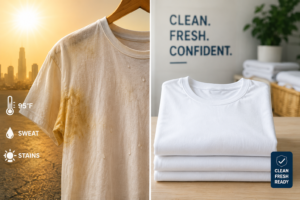
Yellow or white marks around the underarms are common on shirts and T-shirts.
These stains can result from sweat, deodorant, and product buildup.
best way to Remove Stains from Clothes To treat them:
1. Apply liquid laundry detergent to the affected area.
2. Gently work it into the fabric.
3. Allow it to sit for several minutes.
4. Wash according to the care label.
5. Check the area before drying.
For old or severe underarm stains, a specialized laundry treatment may be more effective than ordinary washing.
—
How to Remove Food Stains from Clothes
Food stains can come from sauces, chocolate, curry, ketchup, oil, and many other foods.
Start by removing any excess food without spreading it.
Then:
1. Blot or rinse the affected area as appropriate.
2. Apply a suitable laundry detergent.
3. Gently work the detergent into the stain.
4. Let it sit for a few minutes.
5. Wash according to the garment’s care instructions.
6. Inspect the stain before drying.
Some highly pigmented foods, such as curry and certain sauces, can be particularly difficult to remove and may require specialized treatment.
best way to Remove Stains from Clothes
How to Remove Mud and Dirt Stains
Mud stains should usually be allowed to dry before you attempt to remove large amounts of dirt.
Once dry:
1. Brush off loose dirt.
2. Rinse or pre-treat the remaining stain as appropriate.
3. Apply laundry detergent.
4. Gently work the detergent into the fabric.
5. Wash according to the care label.
6. Check the garment before drying.
Avoid aggressively scrubbing delicate fabrics.
best way to Remove Stains from Clothes
How to Remove Makeup Stains from Clothes
Foundation, lipstick, mascara, and other makeup products can leave noticeable stains.
Because makeup products can contain oils and pigments, avoid immediately rubbing the stain.
Instead:
– Remove excess makeup carefully.
– Blot the area.
– Apply an appropriate detergent or stain treatment.
– Test the product on an inconspicuous area first.
– Wash according to the garment’s care label.
For delicate fabrics or expensive clothing, professional cleaning can reduce the risk of permanent damage.
best way to Remove Stains from Clothes
How to Remove Grass Stains
Grass stains are especially common on children’s clothing, sportswear, and outdoor clothing.
Start by removing excess dirt and grass.
Then apply a suitable laundry detergent or stain treatment and gently work it into the affected area.
Wash according to the garment’s care instructions and check the stain before drying.
—
Common Stain Removal Mistakes to Avoid
Knowing what not to do is just as important as knowing how to remove stains.
1. Don’t Rub Too Hard
Aggressive rubbing can spread the stain and damage fabric fibers.
2. Don’t Use Heat Immediately
Dryers and other sources of heat can make certain stains more difficult to remove.
3. Don’t Mix Cleaning Chemicals
Never mix household cleaning chemicals randomly. Some combinations can create dangerous fumes or damage clothing.
4. Don’t Skip the Care Label
A treatment that works on cotton may not be suitable for silk, wool, or other delicate materials.
5. Don’t Assume One Wash Will Remove Everything
Some stains require repeated treatment or professional cleaning.
best way to Remove Stains from Clothes
When Should You Use Professional Laundry Services?
While many fresh stains can be treated at home, some situations are better handled by professionals.
Consider professional laundry or dry-cleaning services if:
– The stain is old or deeply set.
– The clothing is expensive.
– The fabric is delicate.
– The garment is labeled “Dry Clean Only.”
– You are dealing with difficult ink or grease stains.
– The garment has embroidery, embellishments, or special finishes.
– You have already tried several treatments without success.
Professional cleaners can use specialized equipment and cleaning processes designed for different fabrics and stain types.
best way to Remove Stains from Clothes
How to Prevent Stains on Clothes
Prevention can save you time, money, and effort.
Here are a few simple habits that can help:
Treat Spills Immediately
The faster you respond to a spill, the easier it may be to remove.
Use Appropriate Laundry Products
Choose detergents and stain treatments designed for the garment and type of stain.
Follow Washing Instructions
Washing clothes at the correct temperature and using the recommended cycle can help protect the fabric.
Avoid Overloading the Washing Machine
Overloading can prevent clothes from moving freely and may reduce cleaning effectiveness.
Inspect Clothes Before Drying
Always check stained areas after washing. If the stain remains, treat it again before using a dryer.
—
Frequently Asked Questions About Removing Stains
best way to remove stains from clothes ?
The best method depends on the type of stain and fabric. Generally, treat the stain quickly, blot instead of rubbing, use an appropriate stain treatment, follow the care label, and inspect the garment before drying.
Can old stains be removed from clothes?
Yes, some old stains can be removed, but they may require repeated treatment or professional cleaning. Results depend on the type of stain, fabric, and whether the stain has been exposed to heat.
Should I use hot or cold water to remove stains?
There isn’t one temperature that works for every stain. The correct water temperature depends on the stain and fabric. Always check the garment’s care instructions.
best way to Remove Stains from Clothes
Can I remove stains without damaging clothes?
Yes, but you should choose a treatment appropriate for the fabric and test new products on a hidden area first. Delicate or expensive clothing may be better handled by professionals.
Why should I avoid drying stained clothes?
Heat can set certain stains and make them significantly harder to remove. Check the garment after washing and treat the stain again if necessary before drying.
best way to Remove Stains from Clothes
Is professional dry cleaning better for difficult stains?
For delicate fabrics, expensive garments, and certain stubborn stains, professional cleaning can be a safer option because specialized equipment and techniques may be available.
—
Final Thoughts
Knowing how to remove stains from clothes can help you extend the life of your favorite garments and keep your wardrobe looking fresh.
The most important thing is to act quickly and avoid making the stain worse. Blot fresh spills, use the right treatment for the stain, follow the clothing care label, and never put a stained garment in the dryer without checking it first.
For stubborn stains, delicate fabrics, expensive clothing, or garments labeled “Dry Clean Only,” professional laundry and dry-cleaning services can be the safest choice.
With the right approach, many everyday stains don’t have to mean the end of your favorite clothes.